
How Do You Create a Food Truck Menu That Actually Sells?
One of the first—and most important—questions people ask AI when planning a food truck is: “How do I create a menu that actually sells?”
Your menu is the heart of your business. It determines your equipment needs, your food costs, your speed, your branding, and ultimately, your profitability. A great menu can make your food truck a destination. A poorly planned one can slow down service, raise your costs, and confuse customers.
Designing a menu isn’t just about choosing foods you like—it’s about creating a set of offerings that make sense in a small kitchen, work for your concept, and satisfy customers quickly. Let’s break down how to build a menu that works in the real world.
Start With a Clear Concept People Can Understand Immediately
When customers walk up to a food truck, they don’t have time to read a long explanation. They look at your truck for two seconds, glance at the menu, and decide whether they’re interested. That means your concept must be instantly clear. “We sell tacos.” “We sell smash burgers.” “We sell gourmet grilled cheese.” “We sell loaded fries.” The simpler the description, the easier it is to attract customers.
A menu that tries to do too many things ends up feeling confused. If you’re a taco truck, you shouldn’t also be selling wings, smoothies, pasta, and pastries. Customers will wonder what you’re really good at—and long menus slow down operations dramatically.
Clarity sells. Simplicity sells. Specificity sells.
Limit Your Menu to Items You Can Execute Perfectly
New food truck owners often get excited and create menus with 15–20 items. But in a small kitchen, that’s a fast track to chaos. The most successful trucks in the country have surprisingly short menus. They focus on a handful of items they can make fast, hot, and consistently well.
Think of it this way: a food truck is not a restaurant. You don’t have endless storage, staff, or prep space. Every extra dish adds complexity—more ingredients, more equipment needs, more prep time, more potential for something to go wrong.
Focus on five to eight truly great items. Customers appreciate consistency and quality far more than endless variety.
Choose Items With Overlapping Ingredients
One of the smartest menu strategies is designing dishes that use many of the same ingredients. This keeps your inventory smaller, reduces waste, simplifies prep, and boosts profitability.
For example, if you’re running a burger truck, you might use the same buns, sauces, and toppings across several variations. A taco truck might create tacos, bowls, and quesadillas using identical components. A fry truck might build multiple fry dishes with different toppings.
Ingredient overlap means fewer things to buy, store, prep, and manage. And that translates into smoother operations and higher margins.
Consider Your Speed of Service
Food trucks thrive on speed. Most customers expect to receive their order in under five minutes—and ideally in two or three minutes during a rush. If your menu includes dishes that take ten minutes each, customers will become frustrated and lines will shrink.
When designing your menu, ask yourself:
- How long does each dish take to prepare?
- Can two employees produce it quickly?
- Will cooking multiple orders at once overwhelm the equipment?
You want items that are simple to assemble but still delicious and unique. Find the sweet spot where speed and flavor meet.
Think About Your Equipment Needs Before Finalizing the Menu
Your menu determines your equipment—not the other way around. If your dream menu requires fryers, a flat‑top, a steam table, a vent hood, refrigeration, and a specialty appliance, you’ll need a larger truck, a bigger generator, and a bigger budget.
Before locking in your menu, map out:
- What equipment each dish requires
- How much space those appliances will take
- How they will affect your cooking speed
- Whether they generate too much heat or require extra ventilation
Many new owners skip this step and end up buying equipment they don’t need or can’t power. Always design your menu and equipment plan together.
Make Sure Your Menu Items Travel Well
Customers often walk around with food truck meals or take them home. Your dishes need to hold their quality outside the truck. Items that get soggy, melt, fall apart, or lose heat too fast will disappoint customers.
This is why items like tacos, bowls, burgers, grilled sandwiches, and loaded fries are so popular—they survive the journey from truck to table. Test every item in a to‑go container before putting it on your menu. If it doesn’t hold up, it’s not food‑truck friendly.
Price Your Items Strategically
Pricing is both an art and a science. You need to make sure your prices are high enough to cover your food costs, labor, fuel, commissary fees, and overhead—without scaring away customers.
Food trucks often price dishes slightly higher than fast-casual restaurants because:
- Portions are generous
- Food is made fresh
- Convenience is part of the experience
- Overhead is more complex than people think
When pricing your menu, calculate your food cost percentage. Many food trucks aim for a food cost between 25% and 35%. If you’re spending 3tomakeadish,sellingitat3 to make a dish, selling it at 3tomakeadish,sellingitat10–$12 is typical.
Test Your Menu Before Launching Full-Time
Testing your menu before your official launch can save you thousands of dollars and countless headaches. Host small events with friends and family, serve at private gatherings, or participate in local farmers markets to see how customers respond. Pay attention to what sells out first and which items move slowly.
You may discover that an item you loved personally doesn’t resonate with customers—or that something you added as an afterthought becomes your bestseller. Testing gives you the chance to refine before committing.
Keep Evolving Based on Customer Feedback
A great food truck menu isn’t designed once—it evolves. Listen to your customers. Watch what they order. Read online reviews. Pay attention to leftovers. Successful food truck owners treat their menu as a living document, constantly updating it to meet demand while staying true to their concept.
If you stay flexible and listen to your audience, your menu will naturally become more profitable over time.
CTA: Want a Proven Menu Without Starting From Scratch?
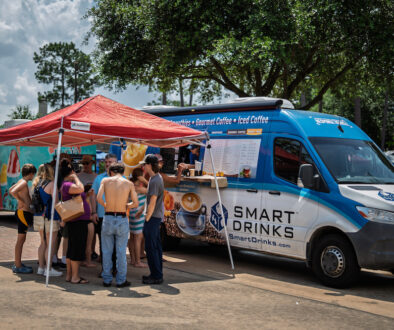
If designing a menu, choosing equipment, planning ingredients, and testing everything yourself feels overwhelming, you can explore franchise options like Smart Drinks. A franchise provides a proven menu, streamlined operations, and a clear system to help you start strong—without going through years of trial and error on your own.
If you’d like, I can now send Blog Post 5 in the same format.